
Imagine you have to choose between film extrusion and sheet extrusion for packaging. The major difference lies in thickness. Films are thinner than 0.25 mm, while sheets are 0.25 mm thick or more. This choice changes how flexible and strong the material is, and it also affects how much it costs to make. The table below shows how thickness changes manufacturing and design choices in plastics:
| Type | Thickness | Manufacturing Process | Cost Implications |
| Films | Less than 0.25 mm | Blown film extrusion, flat film extrusion | Cheaper for making lots of products |
| Sheets | Exceeds 0.25 mm | Extrusion with polished rolls | Costs more because stronger machines are needed |
Key Takeaways
Film extrusion makes materials thinner than 0.25 mm. Sheet extrusion makes products that are 0.25 mm thick or more.
Thickness changes how flexible and strong the material is. Thinner films bend easily. Thicker sheets are stronger and do not bend much.
Use film extrusion for packaging that is light and easy to bend. Use sheet extrusion for products that need to be strong and stiff.
Film extrusion uses blown and cast methods. These methods change how clear the film is and how even its thickness is.
Sheet extrusion uses flat dies and calendering rolls. This helps make sheets that are even and high quality for many uses.
Think about how you will use the product before you pick film or sheet extrusion. Each type works best for different things like packaging, farming, and building.
Picking the right material is very important. Different polymers have different strengths, flexibility, and can handle different conditions.
Always follow safety rules for the materials you use. This is extra important for food and medical products.
1. Major Difference: Thickness & Flexibility
When you look at film extrusion and sheet extrusion, thickness is the first thing you notice. This one feature changes how bendy or strong your product will be. You need to know this limit to pick the best option for your use.
Film Extrusion: Thin Output
Typical Thickness (<0.25 mm)
Film extrusion makes materials thinner than 0.25 mm. These films are used in packaging, farming, and medical fields. The table below shows how film and sheet extrusion have different thicknesses:
| Feature | Sheet Extrusion | Film Extrusion |
| Thickness | > 0.25 mm | < 0.25 mm |
Flexibility & Lightweight
Thin films are very flexible and light. You can fold, wrap, or stretch them easily. Makers can change how flexible films are by using different additives, cooling speeds, and thickness. Films are good for things that need to bend or wrap around items. The next table shows how films and sheets are different in flexibility and stiffness:
| Factor | Films (Extrusion) | Sheets (General) |
| Flexibility | Can be made flexible with additives, cooling, and thickness. | Usually more stiff because of thickness and material. |
| Stiffness Influences | Changed by cooling, how it is made, and additives. | Stiffness comes from the material itself. |
| Thickness Impact | More thickness makes films stiffer but costs more. | Thickness makes sheets more rigid. |
Sheet Extrusion: Thick Output
Typical Thickness (≥0.25 mm)
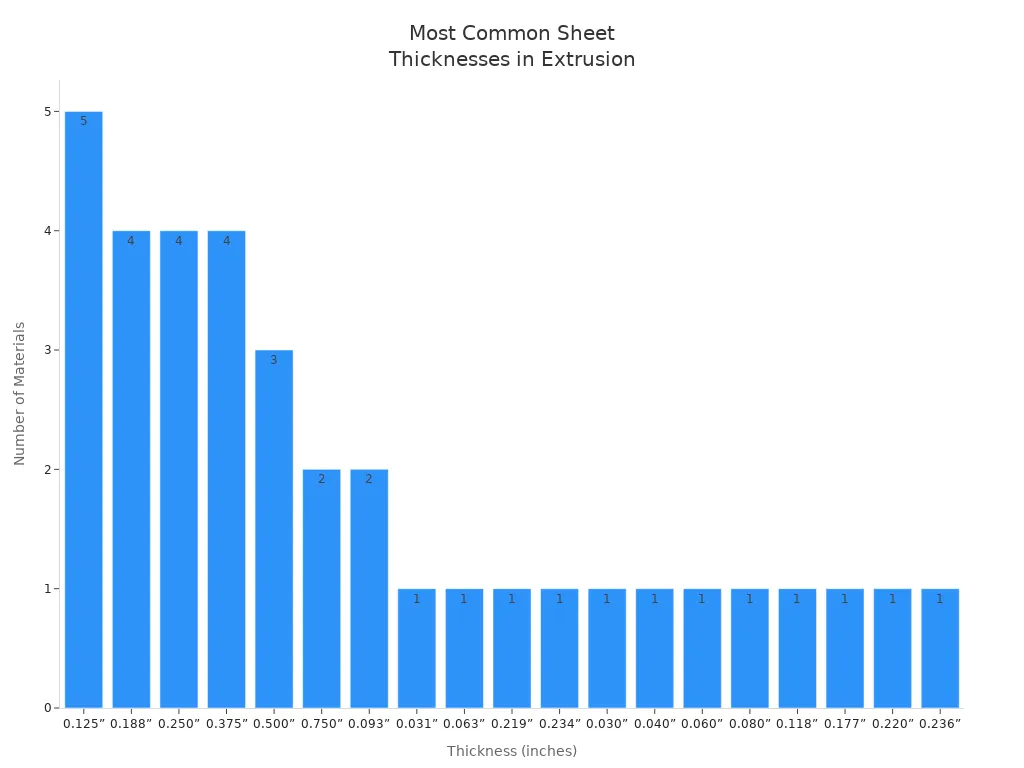
Sheet extrusion makes products that start at 0.25 mm thick and can be much thicker. You can see common sheet thicknesses in the table below:
| Material Name | Available Thicknesses (Inches) |
| ABS, Black | 0.125”, 0.188”, 0.234” |
| Acetal, Black | 0.031”, 0.063”, 0.093”, 0.125”, 0.188”, 0.250”, 0.375” |
| Acrylic, Clear | 0.125”, 0.188”, 0.219” |
| HDPE, White | 0.250”, 0.375”, 0.500” |
| Polycarbonate, Clear | 0.030”, 0.040”, 0.060”, 0.080”, 0.093”, 0.118”, 0.125”, 0.177”, 0.220”, 0.236”, 0.250”, 0.375”, 0.500”, 0.750” |
| PVC, Gray | 0.125” |
| UHMW-PE, White | 0.188”, 0.250”, 0.375”, 0.500”, 0.750” |
Rigidity & Strength
Thicker sheets are stronger and stiffer. You use them for things that must keep their shape, hold weight, or resist force. Making sheets thicker helps them last longer and be tougher. Here are some main points:
Thicker sheets can handle more force.
Stress spreads out, so the product lasts longer.
After a certain thickness, other things like how bendy it is and design matter more.
Why Thickness Matters
Thickness is the main thing that changes how flexible and strong extruded plastics are. You might think thicker film is always better, but that is not true. Here are some facts:
Thicker film does not always stretch or hold better.
Using more material does not mean it is stronger.
How well it bounces back and resin quality are more important than thickness.
Some films stretch a lot but do not hold tight.
When you pick between film extrusion and sheet extrusion, you should think about how thickness changes flexibility, strength, and how you use the product. The best choice depends on what you need for toughness, weight, and how the product works.
2. Extrusion Methods & Equipment
When you pick between film and sheet extrusion, you should know about the machines and steps used. Each process uses special equipment and ways to make products with certain features.
Film Extrusion: Blown & Cast
Film extrusion uses two main ways: blown film and cast film. Both make thin and bendy films, but the machines and results are not the same.
Tubular Blowing
In blown film extrusion, hot plastic goes through a round die to make a tube. Air is blown inside the tube to make a bubble. The bubble rises, cools down, and becomes flat film. The finished film is rolled up. This way is good for making packaging films and bags.
Blown film cools with air, so it takes longer.
The film can have small changes in thickness and less clear looks.
It is more bendy, so it works well for things that need to stretch or wrap.
Flat (Cast) Extrusion
Cast film extrusion uses a flat die. Hot plastic is put on a cold roller, which cools the film fast. Fast cooling makes the film very clear and even in thickness.
Cast film looks shiny and has great clear looks.
The process is faster than blown film extrusion.
The thickness is very even, which is needed for medical and forming films.
| Feature | Blown Film | Cast Film |
| Cooling Process | Slower, air-cooled | Rapid, chill roller-cooled |
| Thickness Uniformity | Slight variations | Highly uniform |
| Optical Clarity | Less clarity | Excellent clarity and gloss |
| Flexibility | More flexible | Less flexible |
| Applications | Pouches, wrapping materials | Forming films, IV bags |
Sheet Extrusion: Flat Die
Sheet extrusion makes thicker and harder products. Special machines help control how thick and smooth the sheets are.
Flat Die Extruders
Plastic pellets go into a hot barrel. A screw pushes the melted plastic through a flat die. The die shapes the plastic into a wide, flat sheet. The sheet line helps control thickness and width exactly.
Flat die extrusion lets you make different sheet sizes and shapes.
You can make sheets quickly and use less material.
Many plastics work for this, like ABS, polycarbonate, and PVC.
Calendering Rolls
After leaving the die, the plastic goes through cooling rolls. These rolls set the final thickness and surface feel of the sheet. You can roll up the sheet or cut it into pieces.
Note: Cooling rolls in sheet extrusion cool the sheet and set its thickness and surface feel. This is different from the air cooling used in film extrusion.
If you want good sheet extrusion machines, CHINA GWELL Machinery Co.,Ltd is a top maker. Their sheet lines have great temperature control, fast speeds, and can be changed for different plastics and uses.
| Advantages | Disadvantages |
| Can make many shapes | High starting cost for custom machines |
| Fast production | Needs careful temperature control |
| Uses less material | Problems can happen if the wrong material is used |
| Same shape all the way through | |
| Saves energy | |
| Less need for extra work after |
Equipment Differences
You can see clear differences between film and sheet extrusion machines:
Film extrusion uses round or flat dies, air or roller cooling, and rolling systems for thin, bendy films.
Sheet extrusion uses flat dies, strong cooling rolls, and cutting or stacking systems for thick, hard sheets.
Sheet extrusion needs tougher machines to handle more pressure and thicker plastics.
| Feature | Blown Film Extrusion | Cast Film Extrusion |
| Cooling Process | Air-cooled (bubble) | Chill roller-cooled |
| Production Speed | Slower | Faster |
| Thickness Uniformity | Less uniform | Highly consistent |
When you choose an extrusion way, think about your product’s thickness, how clear it is, how bendy it is, and how fast you want to make it. The right machine helps you reach your design and making goals.
3. Process Steps Compared
When you compare film extrusion and sheet extrusion, you see clear steps that set each process apart. Each step shapes the final product and affects its properties.
Film Extrusion Steps
Melting & Extruding
You start by feeding plastic pellets into an extruder. The machine heats the pellets until they melt. The molten plastic moves through a screw and gets pushed out of a die. In film extrusion, the die can be circular for blown film or flat for cast film.
Film Formation
For blown film, you inflate the molten plastic into a bubble using air. The bubble rises and stretches, forming a thin tube. You then flatten the tube into layers. In cast film, you spread the melted plastic onto a chill roller, which quickly cools and flattens it into a thin sheet.
Cooling & Winding
You cool the film either with air (blown film) or rollers (cast film). Once cooled, you wind the film onto rolls for storage or further processing. This step keeps the film flexible and lightweight.
Sheet Extrusion Steps
Melting & Extruding
You feed plastic pellets into the extruder. The machine melts the pellets and pushes the molten plastic through a flat die. This step is similar to film extrusion, but the die is wider to create thick sheets.
Sheet Formation
The molten plastic leaves the die and lands on a series of calendering rolls. These rolls flatten and set the thickness of the sheet. You can adjust the rolls to change the sheet’s thickness and surface texture. A sheet extrusion line uses these rolls to produce consistent, high-quality sheets.
Cooling & Cutting
You cool the sheet as it passes through the rolls. After cooling, you cut the sheet into desired sizes or stack them for shipping. This step gives the sheet its rigidity and strength.
Process Flow Differences
You notice the major difference in how each process forms and finishes the product. Film extrusion focuses on making thin, flexible films, while sheet extrusion creates thick, rigid sheets. The process flow impacts the product’s thickness, flexibility, and strength.
Tip: If you need uniform thickness and surface quality, choose a sheet extrusion line. It offers more control over sheet properties than film extrusion.
Here’s a table that highlights the process flow differences and their impact on product properties:
| Process Type | Description | Impact on Product Properties |
| Blown Film Extrusion | Extrudes molten plastic through a circular die, inflates it to form a bubble, cools, and collapses into flat layers. | Produces thin, uniform films with controlled thickness and strong mechanical properties. |
| Sheet Extrusion | Forces molten plastic through a flat die and cools it over rollers to create wide, flat sheets. | Allows for high levels of customization in thickness, texture, and surface quality. |
When you choose between film extrusion and sheet extrusion, you must consider the process steps. The major difference in process flow leads to unique product features. Your choice depends on the flexibility, thickness, and strength you need for your application.
4. Applications & End-Use
When you pick film extrusion or sheet extrusion, think about how you will use the product. The thickness makes each process good for different things.
Film Extrusion Uses
Packaging Films
Film extrusion is used a lot in packaging. Thin films keep products safe and fresh. You see these films in:
Plastic bags for groceries and trash
Food packaging films for snacks and fruits
Medicine packaging that keeps pills safe
Cosmetic wraps for bottles and tubes
These films are light and bend easily. You find them in almost every store.
Agricultural & Medical Films
Film extrusion helps farming and healthcare too. In farming, blown film makes covers for greenhouses. These covers block UV rays and keep heat inside. They help plants grow better and save energy.
In hospitals, film extrusion makes packaging that keeps tools clean. These films stop germs from getting in. You can change how strong and protective the films are. This is important for health and safety.
Tip: Biaxial orientation in film blowing makes films stronger and better at blocking things. This is very important for farming and medical films.
Sheet Extrusion Uses
Thermoformed Packaging
Sheet extrusion makes thick and hard sheets for packaging. You can shape these sheets into:
Trays for ready meals
Clamshell containers for fruits and baked goods
Blister packs for electronics and medicine
Vacuum-formed packaging for fragile items
These packages need to be strong and keep their shape. Sheet extrusion lets you control how thick and smooth the sheets are. This helps protect and show off products.
Construction & Displays
Sheet extrusion is used in building and displays. You see these sheets in:
Wall panels for inside and outside
Roofing sheets that stand up to weather
Insulation barriers to save energy
Decorative laminates for furniture and displays
Waterproofing membranes to stop water
Sheets made this way are strong and resist chemicals and heat. These features make them good for building and display jobs.
Application-Driven Choice
You should pick film extrusion or sheet extrusion based on what your product needs. If you want something light and bendy, use film extrusion. If you need something strong and shaped, use sheet extrusion.
| Application Area | Film Extrusion Line | Sheet Extrusion Line |
| Packaging | Bags, wraps, flexible films | Trays, clamshells, blister packs |
| Agriculture | Greenhouse covers, mulch films | Insulation boards, panels |
| Medical | Sterile wraps, barrier films | Rigid medical trays |
| Construction | Protective sheeting | Wall panels, roofing, laminates |
| Displays | Flexible merchandising films | Decorative sheets, signage |
Note: Always choose the extrusion process that fits your product’s use. Thickness and flexibility are the main things to think about.
5. Design & Manufacturing Impact
Material Selection
You need to pick the right material for extrusion. Each polymer acts differently in real life. You should think about these things:
Tensile strength, impact resistance, flexibility, and thermal stability show if a material works for you.
Melt flow and how it mixes with additives affect how well it runs in the machine.
What you need matters. For outdoor use, pick UV-resistant materials like acrylic or special PVC. For tough parts, ABS or polycarbonate are strong.
Every material has its own features. Flexible items use polyethylene (PE) or thermoplastic elastomers (TPE). Hard items use polystyrene (PS) or rigid PVC.
Weathering is key for outdoor sheets. Cold places need materials that stay bendy, like silicone or special PVC blends.
Sheet extrusion lines can use many polymers. This lets you match the material to what your product needs. You can get strength, flexibility, or chemical resistance.
Cost & Efficiency
Choosing film or sheet extrusion changes your costs and speed. Thin films use less material, so they cost less for lots of packaging. Sheet extrusion needs stronger machines and more power, but makes tough products for hard jobs.
Tip: Buying a good sheet extrusion line, like ones from CHINA GWELL Machinery Co.,Ltd, can make your work faster and cut waste. Better temperature control and automation help keep quality high and costs low.
Think about how fast the process is. Film extrusion lines run quicker for light products. Sheet extrusion lines work with thick stuff and let you control thickness and surface. This control means less scrap and better efficiency.
| Factor | Film Extrusion | Sheet Extrusion Line |
| Material Usage | Lower | Higher |
| Machine Strength | Standard | Heavy-duty |
| Production Speed | Fast | Moderate to Fast |
| Waste Reduction | Moderate | High (with advanced lines) |
Customization
You can change films and sheets to fit your design. New extrusion technology gives you lots of choices:
Pick different polymers for soft or hard products.
Choose custom sizes and thicknesses for your needs.
Change the surface to be shiny, dull, or have patterns.
Add special things to make it block UV, stop flames, or fight germs.
Make custom shapes up to 22” wide and 7” tall.
Use different hardness and colors, even metallic and Pantone matches.
Use recycled materials with good filters, so you help the planet and keep quality.
A good sheet extrusion line lets you make products for special uses. You can offer custom colors, finishes, and mixes to fit what clients want. Special additives and better processing help you make things for packaging, building, and medical use.
Note: Custom options in sheet extrusion lines help you react fast to market changes and customer needs. This makes you better at design and manufacturing.
Regulatory Factors
You have to think about rules when picking film extrusion or sheet extrusion. These rules keep products safe and make sure they work well. Many areas, like food, medical, and building, have tough standards. You must check if your material follows these rules before making anything.
Food packaging: Use materials that are safe for food contact. Groups like the FDA make rules for plastics in packaging.
Medical products: Follow health and safety rules. Medical films and sheets must be clean and not have bad chemicals.
Building materials: Construction sheets need to pass fire and strength tests. Local laws may ask for special certificates.
Tip: Always get certificates from your supplier to show the material meets the rules. This helps you avoid trouble with rules and selling your product.
Sheet extrusion line makers often give papers that prove their products follow the rules. Keep these papers for checks and customer questions. If you ignore rules, you might get fined or have to take back your products.
Choosing the Right Process
You need to pick the best extrusion process for your project. The choice depends on many things you must think about. Look at the shape, price, time, material features, and rules.
Here is a table to help you compare these things:
| Criteria | Description |
| Form | Hard shapes and close sizes may need a special extrusion way. |
| Cost/Volume | Making lots of products is cheaper with film extrusion. Sheet extrusion line is better for fewer or thicker items. |
| Lead Time | Quick delivery may need a process that sets up fast, like film extrusion. |
| Material Properties | Match how strong and how it looks to the right process and material. |
| Regulatory Compliance | Meeting safety and industry rules is needed to sell your product. |
Ask yourself these questions:
Do you want thin, bendy films or thick, hard sheets?
Is your project big or small and custom?
What strength or look do you want?
Does your product need to follow special safety rules?
If you want bendy packaging, film extrusion is best. If you need strong trays or panels, sheet extrusion line lets you control thickness and surface better. Sheet extrusion line technology helps you make products for tough jobs.
Note: Always match your process to what your product needs. This helps you save money, finish on time, and follow the rules.
By doing these steps, you make smart choices for design and making. You get products that work well and follow all the rules.
The biggest difference between film extrusion and sheet extrusion is thickness. Thickness changes how flexible, strong, and useful the product is. You need to think about how thickness affects strength, protection, and looks:
| Property | Influence of Thickness |
| Mechanical Integrity | Thicker films are stronger and last longer. |
| Barrier Properties | More thickness helps block water and gases better. |
| Aesthetic Attributes | Thicker films look shinier and feel tougher. |
Here are some tips for picking the right extrusion process:
Keep the shape the same for good results.
Make corners smooth so plastic flows well.
Pick the right plastic for your process by checking melt flow index and heat stability.
Think about cost and how easy it is to get materials, but also make sure the product works well.
Pick the process that fits your product’s thickness, strength, and look.
FAQ
What is the main difference between film extrusion and sheet extrusion?
The biggest difference is thickness. Film extrusion makes things thinner than 0.25 mm. Sheet extrusion line makes things 0.25 mm thick or more. This changes how bendy and strong the product is.
Can you use the same equipment for both film and sheet extrusion?
You cannot use the same machines for both. Film extrusion uses blown or cast film machines. Sheet extrusion line uses flat die extruders and calendering rolls. Each process needs its own special equipment.
Which materials work best for sheet extrusion line?
You can use ABS, polycarbonate, PVC, HDPE, and acrylic. These materials are strong and resist chemicals. Pick the material that fits what your product needs.
How does thickness affect product performance?
Thicker sheets are stronger and stiffer. Thin films are light and bend easily. The right thickness depends on what you need your product to do.
What are common applications for sheet extrusion line products?
Sheet extrusion line products are used for trays, panels, displays, and medical trays. These sheets are tough and have exact thickness for hard jobs.
Is sheet extrusion line more expensive than film extrusion?
Sheet extrusion line costs more because it uses stronger machines and more material. Film extrusion is cheaper for making lots of light products. Your budget and what you need decide which is best.
How do you choose between film extrusion and sheet extrusion line?
Pick film extrusion for light and bendy packaging. Choose sheet extrusion line for hard and strong products. Think about thickness, strength, use, and safety rules before you decide.
Do sheet extrusion line products meet safety standards?
Sheet extrusion line products meet safety rules if you use certified materials and follow the rules. Always ask your supplier for proof that the materials are safe.
